Routing science
Models a day as a constraint problem (opening windows, drive times, pacing and energy budgets, accessibility, weather exposure) and makes sure the answer is one a guide would sign.
Company · Team
We don't publish a roster or headshots. We'd rather show you how we work: six disciplines that sit together on every engagement, always with someone who has run real trips in the room. You'll meet the people on your crew in your first call.
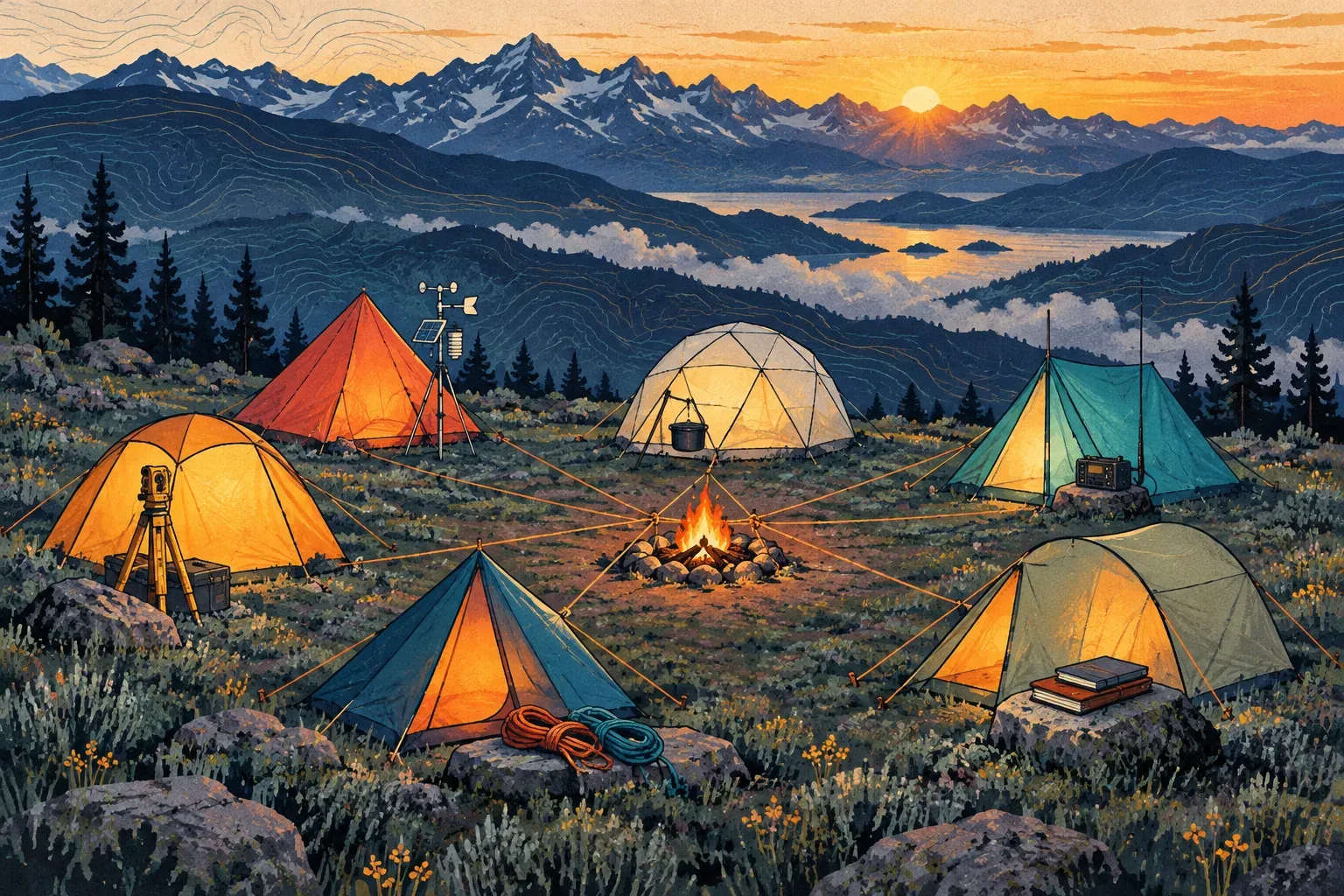
The disciplines
Each discipline has its own craft and its own failure modes. The real work is in how they check each other.
Models a day as a constraint problem (opening windows, drive times, pacing and energy budgets, accessibility, weather exposure) and makes sure the answer is one a guide would sign.
Turns supplier lists, PMS exports, seasonal spreadsheets and fax-to-email confirmations into one dependable model of what's actually available, with gaps flagged instead of guessed.
People who have worked reservations desks, guided groups and made the 9 PM supplier call. They define what good looks like and can veto anything that would break in the field.
Shapes how Concierge and Itinerary Studio speak: tone, when to ask, when to hand off to a person, and, just as important, when to stay quiet.
Builds and evaluates forecasting, ranking and language components against evaluation sets drawn from your real trips, before anything reaches a traveler.
Designs access control, encryption, consent and data minimization into every deployment, and reviews each integration for what it exposes.
How crews form
We don't staff engagements from a bench. We start from what's breaking and pick the disciplines that should lead.
A lodge worried about cancellations needs a different crew than an operator drowning in proposals. We hear the problem before we name anyone to it.
A small crew, always including travel operations, maps your operation and data. One lead owns the plan, the risks and the weekly read-out.
Disciplines join as the work demands: conversational design when Concierge goes live, applied machine learning when Signals starts forecasting.
Your team takes over with documentation and training, or our Managed AI Operations crew keeps watching the system alongside you.
Timeline
A few habits, kept on a schedule, do more for quality than any single clever model.
Fifteen minutes on what happened in live deployments overnight: re-plans, hand-offs, overrides and anything that looked odd.
Travel operations reads a sample of generated itineraries and Concierge conversations line by line, marking anything a guide wouldn't say.
No change ships until it passes evaluation sets built from real trips, including the awkward ones: the wheelchair user, the three-generation family, the storm day.
What happened, why the system allowed it, and what we'll change. Clients receive the write-up.
Crews go where the trip happens (the shuttle, the trailhead, the front desk at check-in rush) and come back with a list.
Field days
Data says a transfer takes forty minutes. A field day tells you it takes forty minutes plus the ten it takes to load bikes onto the trailer. Every crew spends time inside the operation it serves, riding along, walking routes with guides, sitting at the front desk, before it trusts any number in the model. Here's the kind of thing we come back with.
They sent someone who builds routing systems and someone who had obviously worked a reservations desk. The second one asked the questions that saved our pilot.
Related
We keep standing invitations open for each of these disciplines. If your work lives where trips meet software, we'd like to hear from you.